How Car Wreckers Help Reduce Environmental Waste
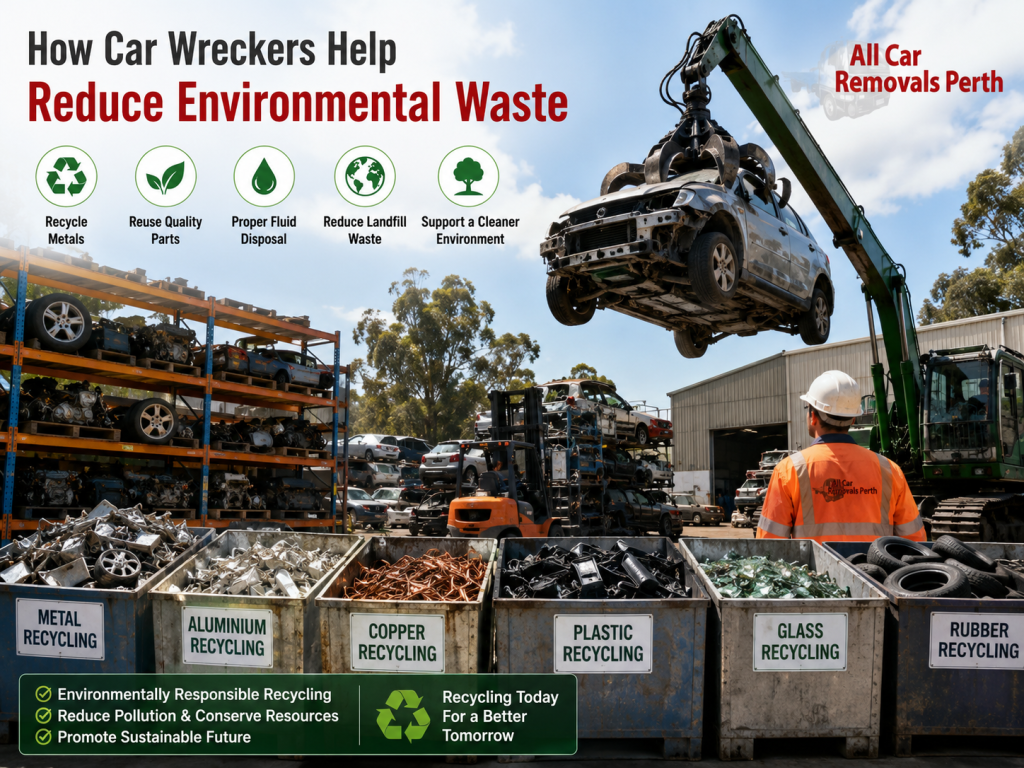
Table of Contents
Authorised car wreckers play a vital role in minimising environmental waste by draining dangerous fluids, salvaging reusable parts, recycling steel and other metals, and disposing of non-recyclable materials in an appropriate manner. Many people think old cars are simply sent to the crusher to be thrown away. In fact, licensed wreckers are great recycling centres, which save valuable materials and reduce pollution.
In this guide, we’ll examine how car wreckers recycle old cars, stop pollution, reclaim precious materials, and help Perth drivers to get rid of unwanted cars responsibly and more in an environmentally friendly fashion.
How Car Wreckers Reduce Waste Through Car Recycling
When a car arrives at a legitimate wrecking yard, it doesn’t just get crushed on the spot. There’s a structured process built to recover as much material and value as possible first.
Recycling Stage | What Happens | Environmental Benefit |
Depollution | Fluids, batteries and hazardous materials are safely removed | Prevents soil and water contamination |
Parts Recovery | Usable components like engines, transmissions and alternators are removed | Reduces the need for new parts manufacturing |
Metal Recovery | Steel, aluminium and copper are processed for recycling | Keeps valuable materials out of landfill |
Responsible Disposal | Remaining non-recyclable materials are handled correctly | Reduces illegal dumping and waste |
Step 1: Depollution.
Before anything else happens, all fluids are drained and safely disposed of. That’s engine oil, coolant, transmission fluid, brake fluid, air conditioning refrigerant, and fuel.
Batteries are removed and sent for proper battery recycling rather than left to corrode. This one step alone prevents the most damaging environmental harm a dead vehicle can cause.
Step 2: Parts recovery.
Once a vehicle is safe to work on, technicians strip out anything still usable: engines, transmissions, alternators, starter motors, ECUs, alloy wheels, catalytic converters.
These become used auto parts resold to mechanics and workshops, extending their working life instead of manufacturing brand-new replacements from raw materials.
Step 3: Metal recovery.
After usable parts are removed, the remaining shell, mostly steel, plus some aluminium and copper, is processed and sent to be melted down and reformed into new steel products.
Steel is one of the most recyclable materials on the planet, and a huge share of a vehicle’s total weight can be recovered this way.
Step 4: Responsible disposal of what’s left.
Whatever can’t be recycled certain plastics, foam, textiles is disposed of according to environmental regulations, rather than dumped illegally or left to break down somewhere it shouldn’t.
Tip: If you’re comparing wreckers, ask which of these four steps they actually follow. A legitimate operator won’t hesitate to explain their fluid handling and where recovered metal ends up.
This is what separates genuine auto recycling from someone simply towing a car away and leaving it to rot in a yard.
Why Car Recycling Matters for the Environment
According to a joint study by the Federal Chamber of Automotive Industries (FCAI) and the Motor Trades Association of Australia (MTAA), around 5% of Australia’s vehicle fleet reaches end-of-life each year, close to 850,000 vehicles, generating an estimated 1.36 million tonnes of waste material annually.
How these vehicles are handled directly affects landfill volumes, soil contamination, and resource recovery.
- Less landfill waste. Recovered steel, aluminium and reusable parts mean fewer raw materials pulled from the earth and less material buried underground.
- Reduced manufacturing emissions. Recycled steel and reused parts cut down on the energy-intensive process of producing new components from raw ore.
- Safer soil and water. Proper fluid removal stops oil, coolant and battery acid from contaminating land and waterways.
- Lower carbon footprint. Reusing an existing alternator or gearbox avoids the emissions tied to manufacturing a new one.
- Supports a circular economy. Every recovered part or recycled metal component keeps materials in use rather than freshly extracted.
Tip: Don’t wait for a non-running car to sit for months before recycling it. The more intact it is, the more parts and material can actually be recovered rather than wasted.
Car Recycling vs Selling Privately: Which Option Is Better for the Environment?
It’s worth weighing this against the alternatives, because not all disposal routes are equal for the environment.
Disposal Option | What Happens | Environmental Impact |
Recycling through a licensed wrecker | Fluids are drained safely, reusable parts are recovered, and metals are recycled for new products. | Lowest environmental risk with maximum material recovery. |
Leaving the car parked and unused | The vehicle slowly deteriorates as seals, fuel lines and components break down over time. | Higher risk of fluid leaks, rust, and reduced recycling potential. |
Selling privately for parts | Some parts may be reused, but proper depollution and disposal of the remaining shell may be overlooked. | Can lead to unsafe fluid handling and leftover waste. |
Abandoning or illegal dumping | The vehicle is left without proper treatment or recycling. | Highest environmental harm, with potential soil and water contamination. |
Of the four, only a licensed recycling process is actually built around minimising environmental harm at every stage, rather than as an afterthought.
Why Perth Drivers Should Choose Responsible Car Disposal
Perth has a large, spread-out vehicle fleet, and WA’s existing metal recycling infrastructure means the region is well set up to recover value from scrap vehicles responsibly.
Choosing a local car dismantlers Perth service over a long-distance operator also cuts down transport emissions, since the vehicle doesn’t need to travel far to reach a licensed facility.
If you’re in scrap car removal Maddington or a nearby suburb, that local processing keeps the whole cycle collection, dismantling, parts resale, metal recycling close to home.
Licensed car wreckers such as All Car Removals Perth follow this recycling process by safely removing hazardous materials, recovering reusable parts, and sending the remaining metal for recycling.
Every vehicle collected, whether it’s a written-off sedan, a damaged car no longer roadworthy, or an old truck or ute, goes through the same process: fluids drained safely, usable parts recovered and resold, and the remaining shell sent for metal recycling. Nothing is left to leak into the ground or sit as an eyesore.
Free Car Removal Makes Responsible Recycling Easier
One thing that stops people from recycling properly is the assumption it’ll cost money or take real effort. Most professional car wreckers, including All Car Removals Perth, offer completely free car removal as part of the service.
Here’s what that looks like:
- Request a quote based on your car’s make, model, age and condition.
- Get an obligation-free offer reflecting scrap value and recoverable parts.
- Book a free removal time; same-day or next-day collection is common.
- Get paid cash on the spot when the vehicle is collected.
- The vehicle is recycled properly: fluids drained, parts recovered, metal recycled.
There’s no towing fee, no admin cost, and nothing to organise yourself. That’s a big part of why junk car removal has become the default way Perth locals deal with unwanted vehicles instead of letting them sit for years or, worse, dumping them somewhere they shouldn’t be.
How to Choose an Environmentally Responsible Car Wrecker
Not every car wrecker recycles to the same standards. If you want to make sure your old vehicle is recycled responsibly, it’s worth asking a few questions before you accept an offer.
When choosing a vehicle wrecker, look for one that:
- Permitted to operate and complies with local environmental regulations.
- Removes dangerous fluids such as engine oil, coolant, fuel and brake fluid safely before the vehicle is dismantled.
- Reuses parts such as engines, transmissions, batteries and alternators, then recycles the rest of the shell.
- Sends steel, aluminium and other recyclable materials to approved recycling sites rather than landfill. Properly recycles metals.
- Offers good customer reviews for reliable service, fair pricing and professional collection of vehicles.
- Gives you the paperwork you need, including proof of sale or disposal where applicable, ensuring peace of mind that the vehicle has been properly managed.
Choosing a licensed and environmentally responsible car wrecker means you can be assured that your car is recycled correctly, reducing waste, avoiding pollution and recovering valuable materials for future use.
Recycle Your Old Car Responsibly with All Car Removals Perth
All Car Removals Perth makes it easy to recycle your car in an environmentally friendly and responsible way. Every car brought in is processed through a systematic recycling programme, including the safe removal of hazardous fluids, recovery of reusable parts, and the recycling of steel and other valuable metals wherever possible.
Whether it’s an old sedan, damaged ute, written-off car or unwanted truck, the team provides free car removal, competitive cash prices and responsible recycling across Perth. There is no need to leave an unwanted car to sit idle or go to landfill; you can have it collected and recycled with very little effort.
Contact All Car Removals Perth today for a free quote and have your unwanted vehicle recycled the right way.
Frequently Asked Questions
Is it more eco-friendly to sell my car for parts privately or recycle it through a wrecker?
A licensed wrecker is generally the more environmentally sound option, since private part-outs can skip proper fluid removal and leave the remaining shell unresolved for months.
Is it illegal to abandon or dump an old car in Perth?
Yes, dumping a vehicle on public or private land is against local council rules in WA and can result in fines. A licensed removal and recycling service avoids this entirely.
How can I tell if a car wrecker is actually recycling responsibly?
Ask about their process directly; a legitimate operator will explain how fluids are handled, whether parts are recovered before scrapping, and where the remaining metal is sent.